Understanding
The pearls
Every pearl has its own origin, its own light, its own character. These are the pearls from which ama creations are born.
Baroque pearls
Baroque pearls are a subset of pearls that have fascinated humanity for centuries. Unlike traditional pearls, baroque pearls stand out for their irregular, often asymmetrical shapes and their unique beauty. They are prized for their aesthetic appeal in jewellery.
Baroque pearls can form naturally, without human intervention, which makes their shapes entirely unpredictable and unique.
In cultured pearls, an irregularly shaped nucleus or pearl inserted into the mollusc can lead to a baroque shape.
Biwa pearls
A silky glow and a stable natural colour.
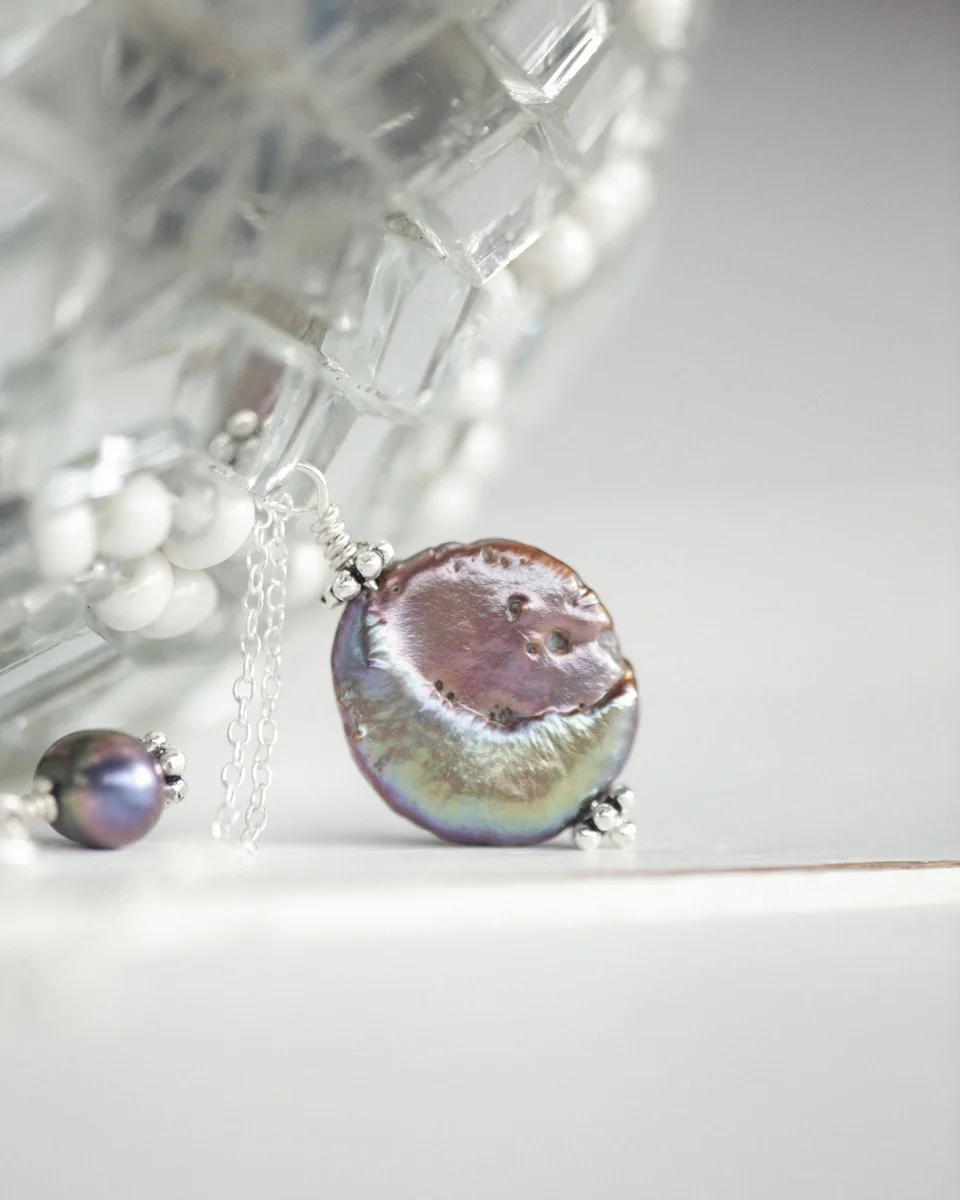
The lustre of Biwa pearls is described as silky and bright, with a pronounced orient. Orient refers to the play of iridescent colours that seem to float beneath the surface. The natural palette covers untreated pastel tones: silvery white, cream, salmon, powder pink, lavender, violet, sometimes with metallic bronze or golden reflections.
Unlike many of today’s freshwater pearls, which are bleached or dyed, the colour of a true pearl from Japan’s Lake Biwa is natural in origin.
Kasumiga pearls
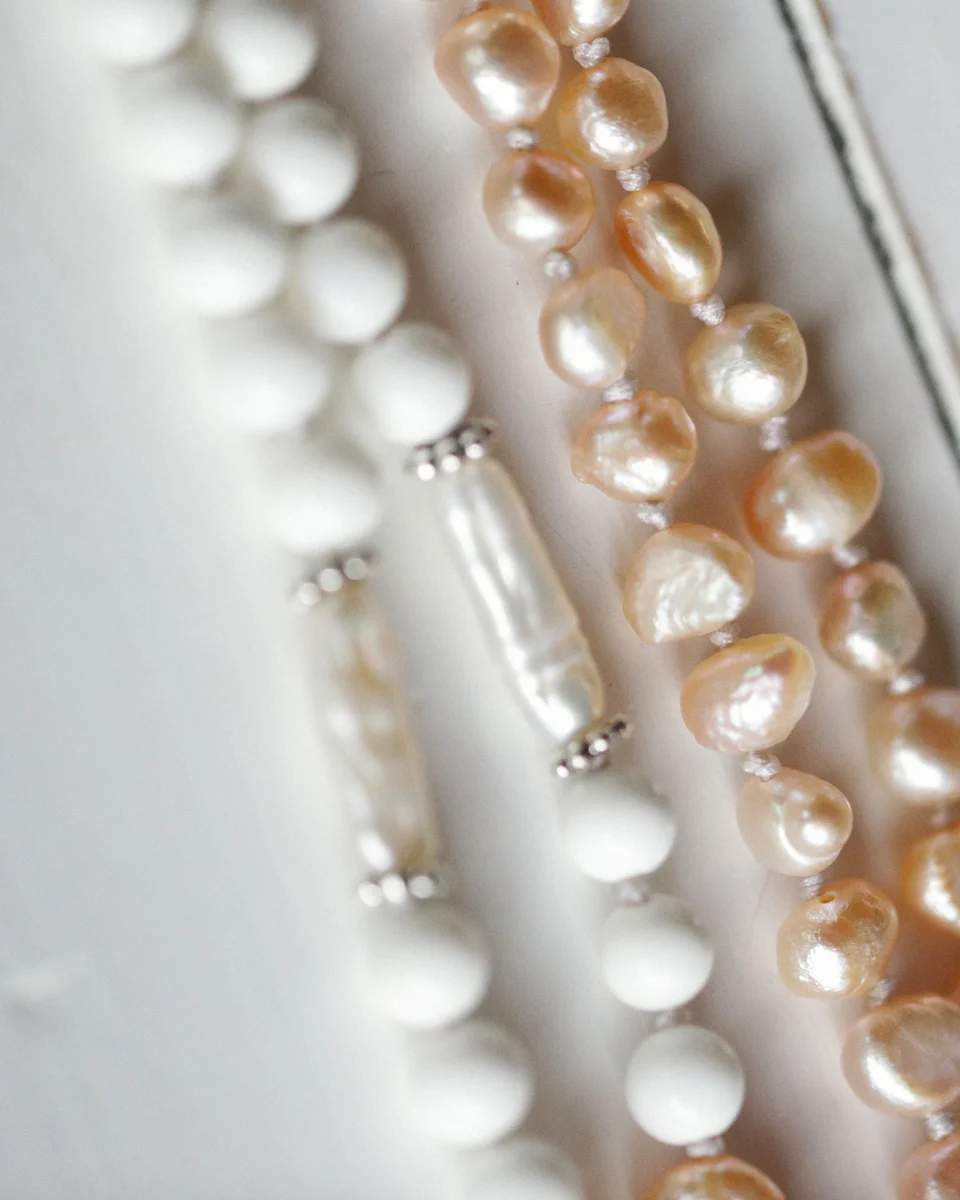
What truly sets Kasumiga pearls apart is their delicate, natural hues: powder pink, lilac, peach, champagne… These are natural colours produced by the molluscs. The shape is usually slightly baroque. Each pearl thus has its own personality for the creation of a unique piece of jewellery.
Kasumiga pearl farming began in the 1990s with only a few family farms. Kasumiga pearls were first cultivated in Lake Kasumigaura, north-east of Tokyo. Today, most Kasumiga pearls are cultivated in China. Unlike Akoya pearls (cultivated at sea), Kasumiga pearls are freshwater pearls, yet they are considered among the noblest varieties in this category because of their highly artisanal farming method.
Of all the pearls used in jewellery, Kasumiga pearls are among the most fascinating. They captivate with their naturally rosy colour, velvety lustre and authentic character.
Keshi pearls
Keshi pearls, also called “keishi”, are pearls without a nucleus, that is, without a core. This variety of pearl can be created either naturally or following human intervention. In the wild, their formation is accidental. Indeed, the keshi is produced by an oyster that has rejected the nucleus after grafting. Keshi pearls are organic in origin, with irregular, baroque shapes.
They are luminous and pleasant to wear, highly prized for their shimmer.
No two pearls are alike. Every piece of jewellery created with a keshi therefore becomes a unique piece.